Delivery of multidisciplinary works
Our capabilities
Power Systems
+Power systems engineering for production facilities: raceways, short-circuit studies, system stability and balancing, motor starters, power lines and AC and DC static equipment. It is the basis on which everything else in the field is sized.
Short-circuit studies
Fault current calculation at each busbar to size the interrupting capacity of the protective devices.
IEC 60909 · IEEE 551
System stability and balancing
Load flow, voltage drop and dynamic behaviour analysis when large motors start.
Motor starters and control
Choice of direct, soft or variable frequency starting according to the torque required and the impact on the network.
AC and DC static equipment
Rectifiers, battery banks, UPS units and backup systems for instrumentation and process control.
Applicable regulations
- Electrical System and Service Act — G.O. 39.573
- PDVSA standards — electrical engineering specifications for oil facilities
- COVENIN 200 (CEN) — Venezuelan National Electrical Code
- IEEE 141 (Red Book) — electrical distribution in industrial plants
- IEEE 399 (Brown Book) — industrial power system analysis
- IEEE 551 (Violet Book) — short-circuit current calculation
- IEC 60909 — short-circuit current calculation in three-phase systems
- IEEE 1159 — electrical power quality monitoring
- ISO 9001:2015 — calculation notes and engineering dossier
Protection Coordination
+Design and coordination of protective relaying at low, medium and high voltage, including substations. The aim is that a fault trips only the nearest device while the rest of the field keeps producing: poor coordination shuts down the whole installation over a local fault.
Selective coordination
Time-current curves set so that the fault is cleared by the device immediately upstream, without tripping the rest.
Substation protection
Overcurrent, differential, distance and earth fault relays in medium and high voltage switchgear.
Arc flash study
Incident energy calculation, approach boundary definition and switchboard labelling with the required PPE category.
IEEE 1584 · NFPA 70E
Relay settings and testing
Loading settings into the relays, primary and secondary injection testing, and a verification protocol.
Applicable regulations
- CORPOELEC standards — protection requirements at the point of connection
- PDVSA standards — protection philosophy for production facilities
- IEEE 242 (Buff Book) — protection and coordination in industrial systems
- IEC 60255 — measuring relays and protection equipment
- IEEE C37.112 — inverse-time curves for overcurrent relays
- NFPA 70E — arc flash analysis and PPE category
- IEEE 1584 — arc flash incident energy calculation
- ISO 9001:2015 — coordination study delivered with curves and relay settings
Grounding and Cathodic Protection
+Grounding systems, cathodic protection, electronic and lightning protection according to the keraunic level of the area, and corrosion protection for tanks and pipelines. In oil and gas facilities grounding does more than protect equipment: it prevents the spark that ignites a flammable atmosphere.
Grounding System
Soil resistivity measurement by the Wenner method, grid design, electrode installation and verification of the resistance value.
IEEE 80 · IEEE 81
Cathodic protection
By sacrificial anodes or impressed current, to control external corrosion on buried pipelines and tank bottoms.
NACE SP0169 · API 651
Lightning protection
Air terminals and down conductors sized to the keraunic level of the area, with bonding of metal masses.
Electronic protection
Surge protective devices (SPD) in switchboards and at the entry of instrumentation and communications signals.
Applicable regulations
- PDVSA standards — grounding and cathodic protection in production facilities
- IEEE 80 — safety in AC substation grounding
- IEEE 81 — soil resistivity and ground resistance measurement
- IEC 62305 — lightning protection and keraunic level
- NACE SP0169 — external corrosion control on buried or submerged pipelines
- NACE SP0607 / ISO 15589 — cathodic protection of pipeline systems
- API 650 / API 651 — cathodic protection of storage tank bottoms
- COVENIN 200 (CEN) — grounding system of the installation
- ISO 9001:2015 — measurement protocol and certificate of recorded values
Hazardous Area Classification
+Hazardous area classification and selection of electrical equipment suitable for each zone. Wherever there is gas, vapour or flammable dust, any equipment of the wrong type is an ignition source. We produce the classification drawing and specify the equipment that may be installed at each point.
Area classification drawing
Identification of the sources of release and delimitation of Zone 0, 1 and 2 (or Class I Division 1 and 2) with their horizontal and vertical extent.
API RP 505 · IEC 60079-10-1
Ex equipment selection
Specification of the right protection type: flameproof (Ex d), increased safety (Ex e) or intrinsic safety (Ex i), according to the zone.
Ex installation and integrity
Fire seals, certified cable glands and raceways that preserve the integrity of the protection throughout the installation.
IEC 60079-14
Audit of existing installations
Review of operating plants to find equipment unsuitable for its zone, the most common finding in installations after years of successive extensions.
Applicable regulations
- PDVSA standards — area classification in production and refining facilities
- COVENIN 200, Sección 500 (CEN) — classification by Class, Division and Group
- API RP 500 / API RP 505 — classification by Divisions and by Zones in oil facilities
- IEC 60079-10-1 — classification of areas with explosive gas atmospheres
- IEC 60079-14 — design and installation of electrical systems in classified areas
- NFPA 497 — recommended practice for classification in process plants
- IEC 60529 (IP) / NEMA 250 — ingress protection rating of enclosures
- Certified Ex equipment — ATEX / IECEx by protection type (Ex d, Ex e, Ex i)
- ISO 9001:2015 — area classification drawing and approved equipment list
Process Optimisation
+Energy efficiency and load behaviour optimisation: inrush current analysis, pumping systems and frequency regulation with variable speed drives. The aim is to cut the bill and extend equipment life without touching production.
Inrush current analysis
Measurement of the starting peak of large motors and its effect on voltage drop across the rest of the installation.
Frequency regulation with variable frequency drives
Variable speed drives to match pumping flow to actual demand, instead of throttling with a valve, which is where the energy is wasted.
IEC 61800
Power factor correction
Capacitor banks sized to avoid the low power factor penalty and free up transformer capacity.
Harmonic distortion
Distortion measurement and filtering where drives and non-linear loads degrade the waveform.
IEEE 519
Continuous measurement with VenIoT®
Without permanent measurement the saving is lost within months. VenIoT keeps the variables in plain sight and warns when consumption drifts from the baseline.
Applicable regulations
- PDVSA standards — energy efficiency in production facilities
- ISO 50001 — energy management system
- IEEE 1159 — power quality monitoring
- IEEE 519 — harmonic distortion limits on the grid
- IEC 61800 — variable frequency drives (VFD)
- COVENIN 200 (CEN) — power factor correction
- VenIoT® — continuous measurement to sustain the improvement over time
- ISO 9001:2015 — baseline report and verified savings
Medium and Low Voltage Electrification: Upstream, Midstream and Downstream
+We bring power to where production happens: well pads and wells upstream, flow stations, pumping and transport midstream, and tank farms and storage facilities downstream. Medium voltage networks, service entrances, transformer banks and low voltage distribution, with the hazardous area classification each point requires.
Upstream: well pads and wells
Medium voltage supply to well pads, transformer banks and low voltage distribution to downhole pumps, wellheads and control houses.
Midstream: pumping and transport
Energization of flow stations, pumping stations and transfer systems, accounting for high-power motor starting and its impact on the network.
Downstream: storage
Tank farms, filling and dispatch systems, with grounding, cathodic protection and equipment rated for the classified area.
The whole job
From the CORPOELEC feasibility study to the VLF tests and the energization certificate, with a single party responsible.
IEEE 400.2
Applicable regulations
- Electrical System and Service Act — G.O. 39.573
- CORPOELEC — feasibility, project approval and site inspection
- PDVSA standards — electrical distribution specifications for oil fields
- COVENIN 200 (CEN) — including Section 500 at classified points
- IEC 60502-2 — cables rated 6 to 30 kV
- ANSI C2 (NESC) — safety clearances on overhead lines
- API RP 505 — area classification at the connection points
- IEEE 400.2 — VLF testing of medium voltage cables before energizing
- ISO 9001:2015 — test protocol and energization certificate
Communications Across Oil Field Perimeters
+Data and voice communication across an oil field, where distances are long, cellular coverage is patchy and the points to connect are scattered. We combine LoRa, 4G/5G, satellite links and fiber optics according to what each stretch allows, so that telemetry from wells and stations always reaches the control room.
LoRa for scattered telemetry
It links well and station sensors several kilometres away on very low power, without relying on cellular coverage. It is the natural choice in open field.
LoRaWAN
4G/5G y red celular privada
Where the carrier has coverage, or with a private network when the field justifies the investment and requires control over the traffic.
Satellite link
For facilities with no terrestrial coverage at all, either as backup to the main link or as the only route in remote areas.
Backbone fiber optics
Ducted or aerial between stations and the control room, usually sharing the trench with the field's medium voltage network.
Integration with VenIoT®
Every link converges on the platform: power, level, pressure and temperature variables, with alarms and remote commands from a single dashboard.
Applicable regulations
- Telecommunications Act — licence and use of spectrum allocated by CONATEL
- CONATEL — bandas ISM — use of unlicensed bands for LoRa and WiFi
- LoRaWAN (LoRa Alliance) — long range and low power consumption in open field
- 3GPP (4G LTE / 5G NR) — private or carrier cellular network
- ITU-R P.530 — availability of point-to-point microwave links
- ITU-T G.652.D — single-mode fiber on the backbone segments
- IEC 60079 — communication equipment in classified areas
- IEC 62443 — cybersecurity in industrial automation networks
- VenIoT® — in-house telemetry and remote control platform
Proven experience
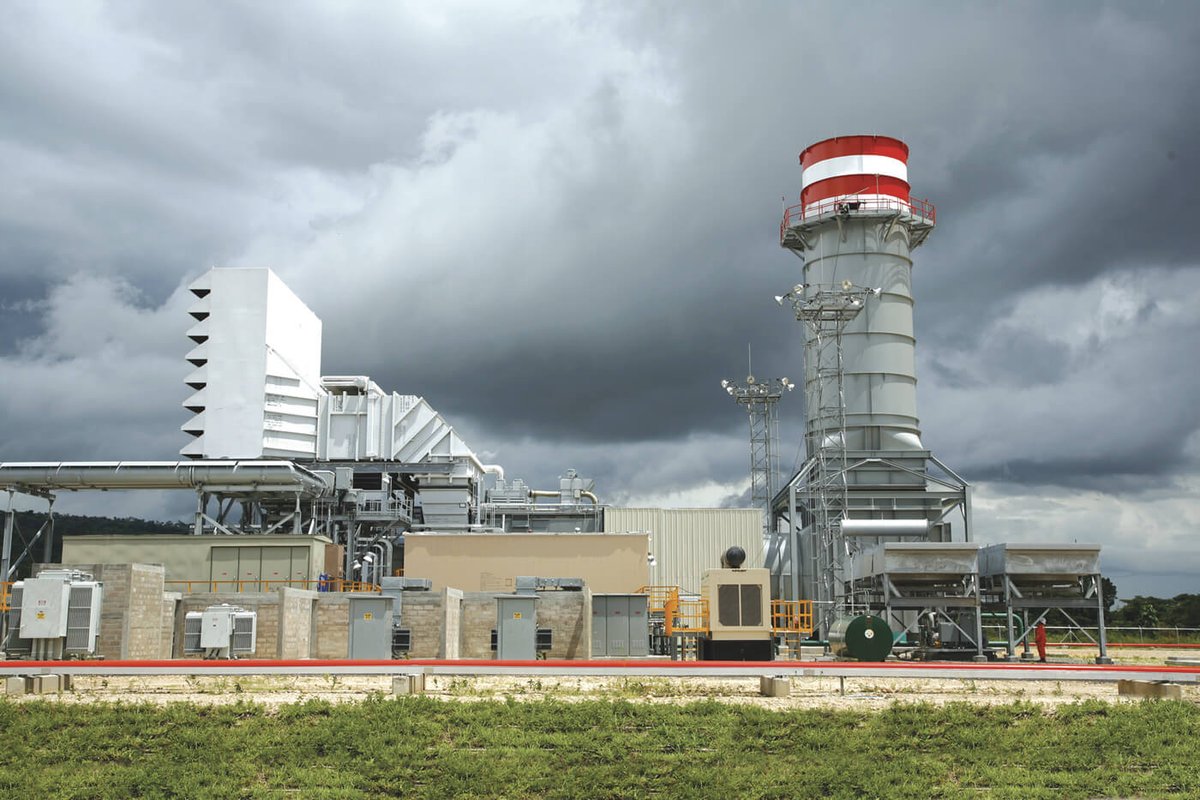
Termobarrancas Thermoelectric Plant
Basic and detailed engineering of the control room and control systems for a 500 MW plant feeding the National Electrical System.
Companies that trust us



Do you need electrical engineering for your oil and gas operation?
From power systems to hazardous area classification. Contact us for a technical assessment.